Application Note / 2026-09-15
CNC Machine Tending Project Budget: What to Verify Beyond the Robot
A one-CNC tending budget becomes comparable when equipment, site work, integration, safeguarding, training, and support scope are separated before prices are compared.
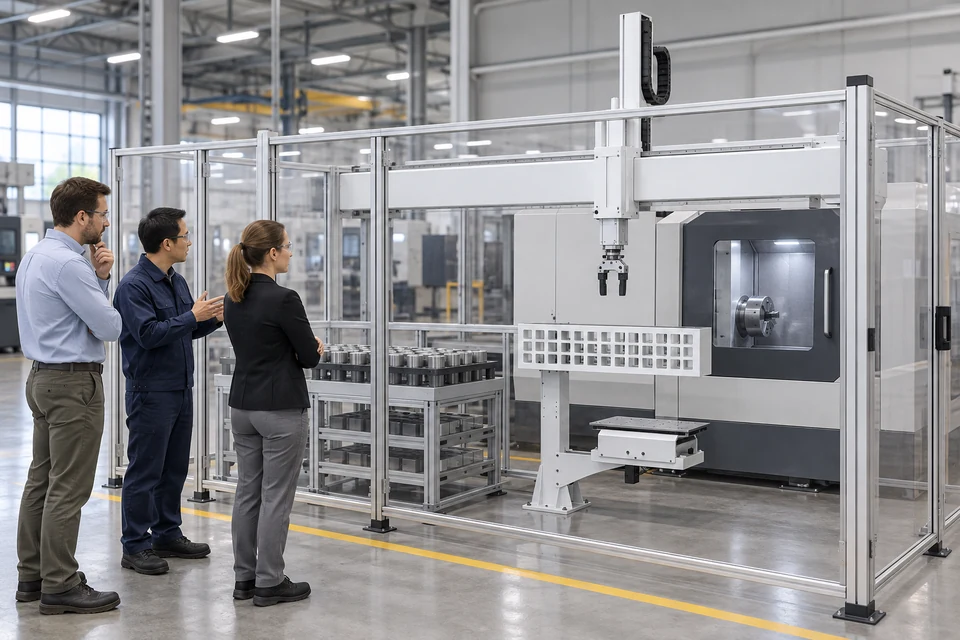 Application scenario illustration / final layout subject to engineering review.
What should a CNC machine tending project budget include beyond the robot? Treat equipment and tooling, part staging, CNC integration, installation, training, and support as separate confirmation questions. Inclusion, responsibility, and price must come from the project-specific supplier scope; a category list does not state what QIXING includes or what the project will cost.
Separate the robot from the rest of the cell
A disclosed vendor machine-tending package can contain a robot, end-of-arm tooling, a system base, raw and finished-part staging, and CNC integration.[^ur] Those are useful category names, not evidence that any item belongs in a QIXING quotation or in the robot price.
Which components are actually in the quoted scope?
Ask each supplier to identify the actual robot, tooling, base, staging, and CNC-integration scope, with the supporting quotation. Single-machine tending application supplies one-CNC context only; it does not declare package inclusion, compatibility, or price.
Identify work needed to install and commission the project
Installation and integration, operator training, and long-term support are separate planning categories in NIST guidance.[^nista] Other applicable project questions can include infrastructure, personnel, commissioning or production disruption, necessary upgrades, and support or maintenance.[^nistb] The actual provider, inclusion, and responsibility remain open until the project scope is confirmed.
This is not a basis for estimating downtime, installation duration, or factory cost. For integration input collection, see the CNC machine-interface input checklist; that page does not determine a commercial scope.
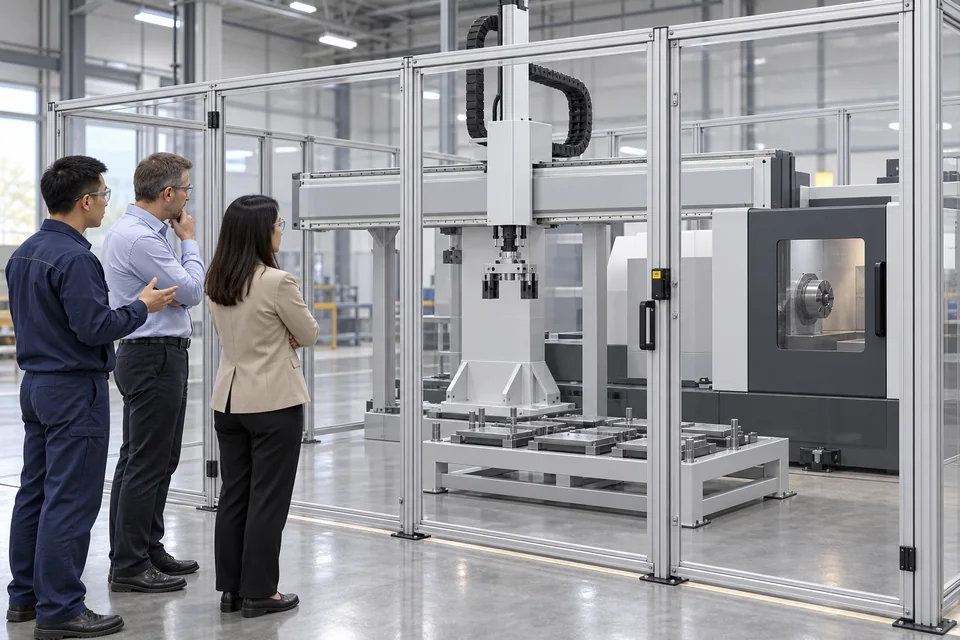 Application scenario illustration / final layout subject to engineering review.
Keep safeguarding, training and support as explicit scope questions
Safeguarding cannot be assumed from robot type. A task or application risk assessment may identify measures such as fencing or light curtains, so both the required measure and its commercial scope stay open until reviewed.[^nistb] This page does not recommend a guarding method.
What remains unquoted?
Training, support, maintenance, upgrades, and site work should each be marked as included, excluded, or unconfirmed. Do not assume they are free, supplied by one party, or already priced. The same applies to quantities and specifications: they belong in the supporting quotation, not in a generic budget template.
Compare quotations using the same scope table
Use the same category labels for each quotation, then keep exclusions and unanswered inclusion questions visible. This is a scope-comparison tool, not a cost calculator or payback model.
If a quotation names a category without saying whether it is included, record that uncertainty rather than treating the heading as a commitment. If two suppliers describe the same work differently, the open question is still the same: what work is covered, who owns it, and where is its price status evidenced?
| Category | Included, excluded or unconfirmed | Supplier/factory responsibility | Evidence and price status |
|---|---|---|---|
| Robot | ______ | ______ | ______ |
| Tooling, base, staging | ______ | ______ | ______ |
| CNC integration | ______ | ______ | ______ |
| Installation, infrastructure, commissioning | ______ | ______ | ______ |
| Safeguarding review | ______ | ______ | ______ |
| Training | ______ | ______ | ______ |
| Support, maintenance, upgrades | ______ | ______ | ______ |
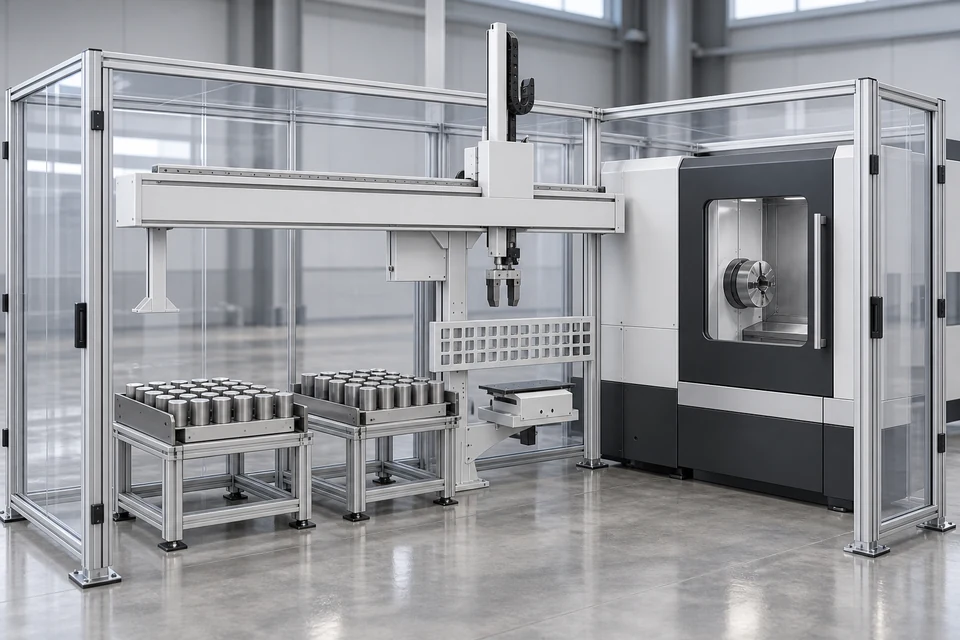 Application scenario illustration / final layout subject to engineering review.
Frequently asked questions
Is the robot price the price of the complete CNC tending project?
No. Equipment and integration categories should be separated; this page does not infer a multiplier or a project total.
Are installation, training and support automatically included?
No. Confirm explicit quotation inclusion and the responsible party for each category.
Can safeguarding be budgeted as a fixed standard add-on?
No. The needed measure remains open pending task and application review; this page prescribes neither hardware nor cost.
How can two quotations be compared when their scope differs?
Use identical categories, inclusion status, ownership, and priced or unpriced status. Do not rank suppliers using invented prices.
Sources and use boundary
[^ur]: Universal Robots — WST Fab Machine Tending Case, used only for the category names in one disclosed package; its customer, model, price, timing, and results are excluded. [^nista]: NIST MEP — Automation 101, used only for planning categories. [^nistb]: NIST AMS 100-41, used only for project-category boundaries.
Share your CNC project scope, including actual CNC and workpiece context, quotation scope, site work, and open inclusion or responsibility questions for project review.